
Are amphipods reef safe?
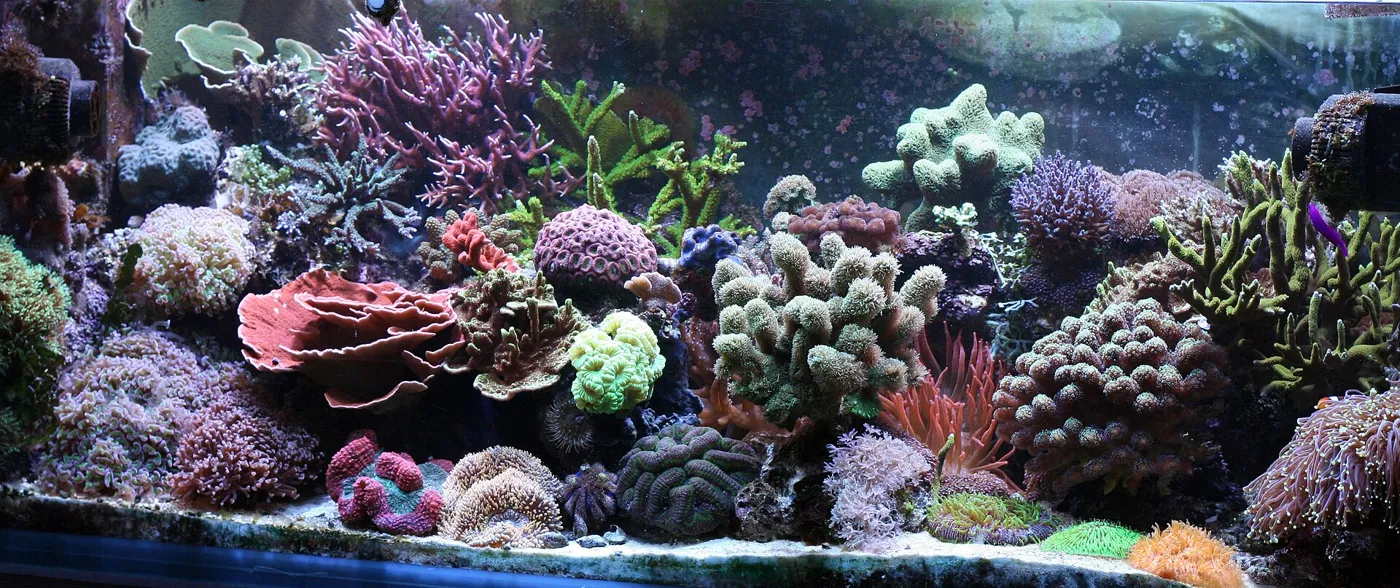
Photo: see image credits.
Short answer: yes, amphipods are reef safe in a normal reef tank. They eat detritus, film algae and leftover food, and they feed your fish. Reports of pods eating coral almost always involve damaged or stressed tissue, or a huge predator-free population that has run out of food.
On this page
What amphipods do in a healthy reef
- Eat detritus, fish waste, uneaten food and film algae.
- Get into crevices that snails and hermits cannot reach.
- Serve as live food for wrasses, mandarins, gobies, seahorses and many other fish.
- Signal a mature system: a few pods on the glass at night is a good sign.
Do amphipods eat coral?
Not healthy coral, in normal circumstances. Hobbyists do report pods on receding zoanthids, acans or SPS bases, and the usual explanation is that the tissue was already injured from handling, gluing, a snail, or water quality. Pods are scavengers, so they show up where tissue is dying.
The exception: a tank with no pod predators, very low nutrients and an exploding population of large amphipods. Keepers in that situation sometimes report pods nipping soft tissue on zoanthids, palys or stressed SPS. The fix is balance, not panic.
Want a cleanup crew that feeds your fish?
Start with 100+ live amphipods.
When pods help vs when to watch them
| Situation | Typical outcome | What to do |
|---|---|---|
| Mixed reef with fish that hunt | Pods are beneficial cleanup crew and food | Nothing; keep seeding as needed |
| Mandarin, seahorse or wrasse tank | Pods get eaten faster than they breed | Refugium plus regular restocking |
| Fallow tank or no fish, heavy feeding | Population can explode | Feed less; add a pod-eating fish when appropriate |
| Ultra low nutrient SPS tank, no predators | Hungry pods may pick at stressed tissue | Watch at night, reduce numbers, keep some predation |
If you think pods are bothering a coral
- Check at night with a flashlight for 2 or 3 nights before blaming pods.
- Look for an underlying cause: fresh frag damage, glue, a snail or a parameter swing.
- Move the coral to a frag rack temporarily.
- Reduce feeding by roughly 20 to 30 percent if the population is very high.
- A six line or other small wrasse will usually bring numbers back down.
Keep the pods coming
200+ live amphipods weekly, every 2 weeks or monthly, shipping included.
FAQ
Are amphipods good or bad for a reef tank?
Good in almost all reef tanks. They clean detritus and are natural food for many fish.
Do amphipods eat coral?
They normally scavenge dying or damaged tissue. Rare reports of nipping healthy coral involve very large populations with no predators and little food.
Are amphipods safe with clams?
Usually. Reports of pods on clams typically involve a clam that was already weak or damaged.
Do amphipods eat copepods?
Occasionally, when food is scarce. In a fed, mixed reef both live together easily.
Related guides
- Amphipods for mandarin dragonets: how live pods keep a mandarin fed
- How many pods does a mandarin need?
- Live pods for seahorses: using amphipods in a seahorse tank
- Pod seeding guide: how to add amphipods to a reef tank
- Amphipods vs copepods: which live pods does your tank need?
- Gammarus, Elasmopus and Parhyale: amphipod species in reef tanks
- How to culture amphipods at home
- Live pods in Florida: Florida-cultured amphipods, shipped to your door
- How long do amphipods live in a reef tank?
- Amphipods for a nano reef: keeping pods alive in a small tank
- Pods for a refugium: how to grow amphipods in your sump
- How to keep live pods alive after shipping
- Shipping live pods in winter: will amphipods survive the cold?
- How much do live pods cost?
- What fish eat amphipods?